
These tips for hotel safety take seconds, cost almost nothing, and start with the one lock too many travelers forget to use.
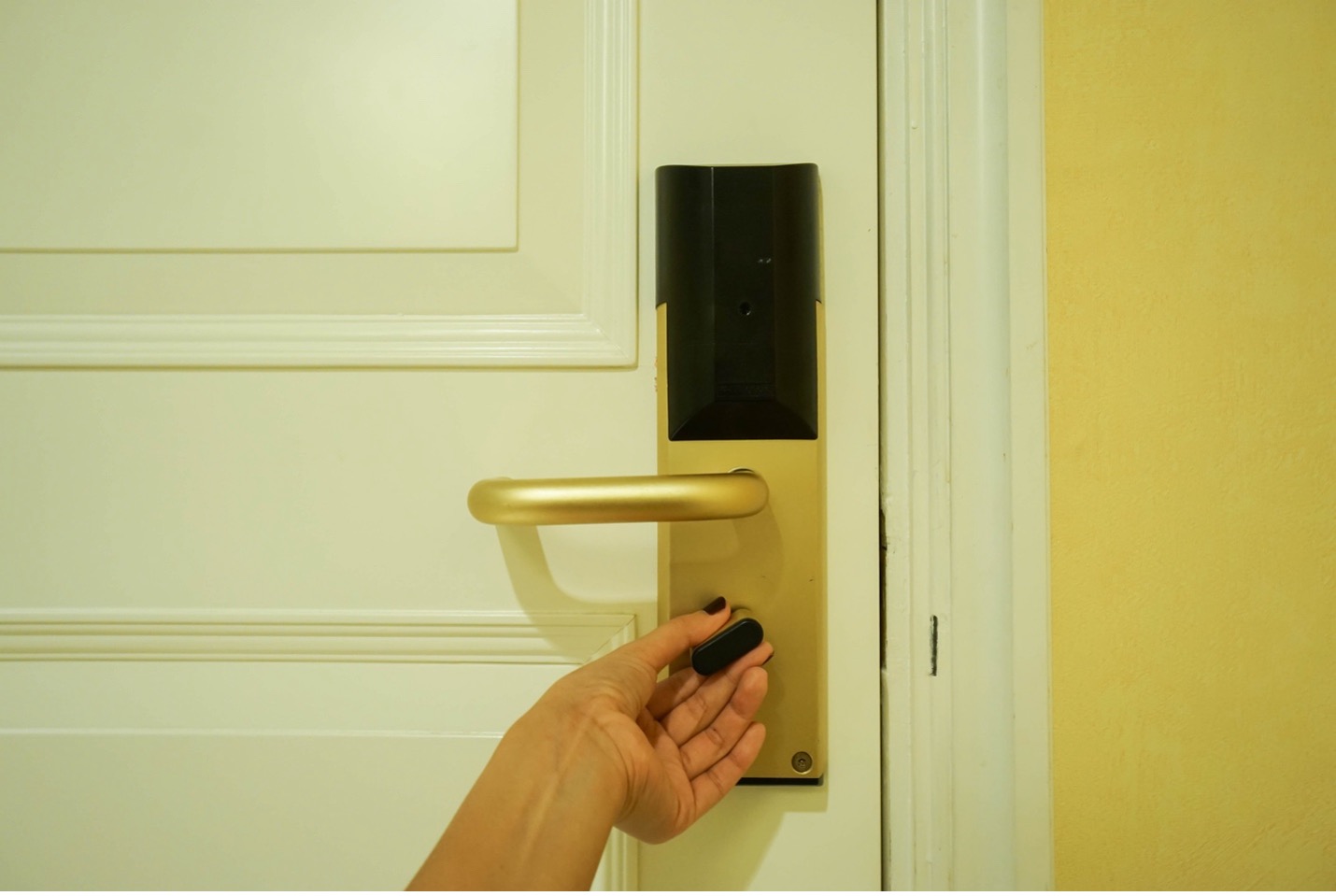
You swipe the keycard, wait for the little green light, and shoulder the door open, already eyeing the bed after a long travel day. For most of us, stepping into a hotel room feels like stepping into a private bubble, a place where the outside world finally can’t reach you.
But a hotel room is less secure than it feels. Here’s the short list of habits I run through on every stay to improve my safety (and the one I’ll admit I still skip).
Walk in slowly (and say hello)
When I first reach my room, I open the door slowly and call out a quick “hello.” It sounds silly until it happens to you: more than once I’ve been handed a key to a room that was already occupied. After that, I do a quick lap—closets, behind the curtains, under the bed. Is some of that paranoia rather than logic? Probably. But it takes ten seconds and lets me settle in.
Guard your room number
I toss the little paper sleeve the front desk tucks your keycard into, the one with your room number written on it. If I lose the key, I don’t want whoever finds it to know which door it opens. Instead, I jot the number into a note on my phone or snap a photo of the door.
Check the connecting door
If your room has a connecting door to the one next door, confirm it’s locked on your side. I once had a stay where both sides were unlocked and the door simply swung open mid-trip.
Use the deadbolt—always
If you take one thing from this list, take this: throw the deadbolt every time you’re in the room, awake or asleep. The single biggest risk in a hotel isn’t a burglar climbing through a window—it’s the sheer number of people with master keys. Nearly every horror story about someone walking in on a sleeping guest comes down to a deadbolt that wasn’t used. Lock it, and you’ve prevented the majority of what could go wrong.
One catch worth knowing: more hotels now use deadbolts integrated into the electronic lock, which can be popped open remotely. In this case, I use a cheap rubber doorstop; you may prefer the fancier version with an alarm that shrieks when someone pushes the door against it. Both slow an intruder down and the latter will jolt you awake.
Choose the suitcase instead of the safe
I use the in-room safe, but I don’t kid myself that it’s airtight; safes get broken into. (You’ve seen the YouTube videos, right?) I keep valuables in a locked suitcase instead. It’s not impenetrable either, but I trust it more than the safe. And if you’re really feeling paranoid, you can cable-lock the suitcase to a piece of furniture.
Know your exits
Husband was a volunteer firefighter (he drove the truck!). Thanks to him, I review the fire-escape plan on the back of the door, then actually walk to the nearest stairwell to confirm the door opens and the stairs are clear. I hang the “do not disturb” sign whenever I leave, and double-check that the door latches behind me.
The precaution I skip (but shouldn’t)
Every so often there’s a tragic story of travelers dying of carbon monoxide poisoning in a hotel or Airbnb. A cheap CO meter would reduce that risk and buy real peace of mind. I don’t carry one. I probably should.
Why hotels are safer than they feel (and why they’re not)
Hotels have limited entry and exit points, cameras in the hallways, neighbors close enough to hear a scream, and not much worth stealing from a single room. Most other risks—a spiked drink at the bar, a bag snatched in the open, the wrong person invited upstairs—aren’t really hotel problems so much as everywhere problems. The one genuinely hotel-specific risk is all those master keys. Which brings us back to using the deadbolt or a doorstop…
Twist’s Take: Follow these precautions for a safer stay; at a minimum, use a deadbolt/doorstop whenever you’re in the room.