“Let’s never come here again, because it would never be as much fun.”
It’s a key line in Lost in Translation. Said almost offhand, it carries the whole film: that Tokyo night, that fragile chemistry, that exact version of who they were can’t be summoned twice. And it’s not just the truth of two characters in a movie. It’s the truth of travel itself.
We convince ourselves otherwise. We keep lists of places to return to, cafés to revisit, hikes to replay, as if the past were waiting on pause. But the meal won’t taste the same. The sunrise won’t fall on the same you. The city has changed, and so have you. That’s the catch inside the line: the moment you try to relive an experience, you prove it was unrepeatable all along.
Of course, we go back anyway. Because we’re hopeful. Because we can’t help ourselves.
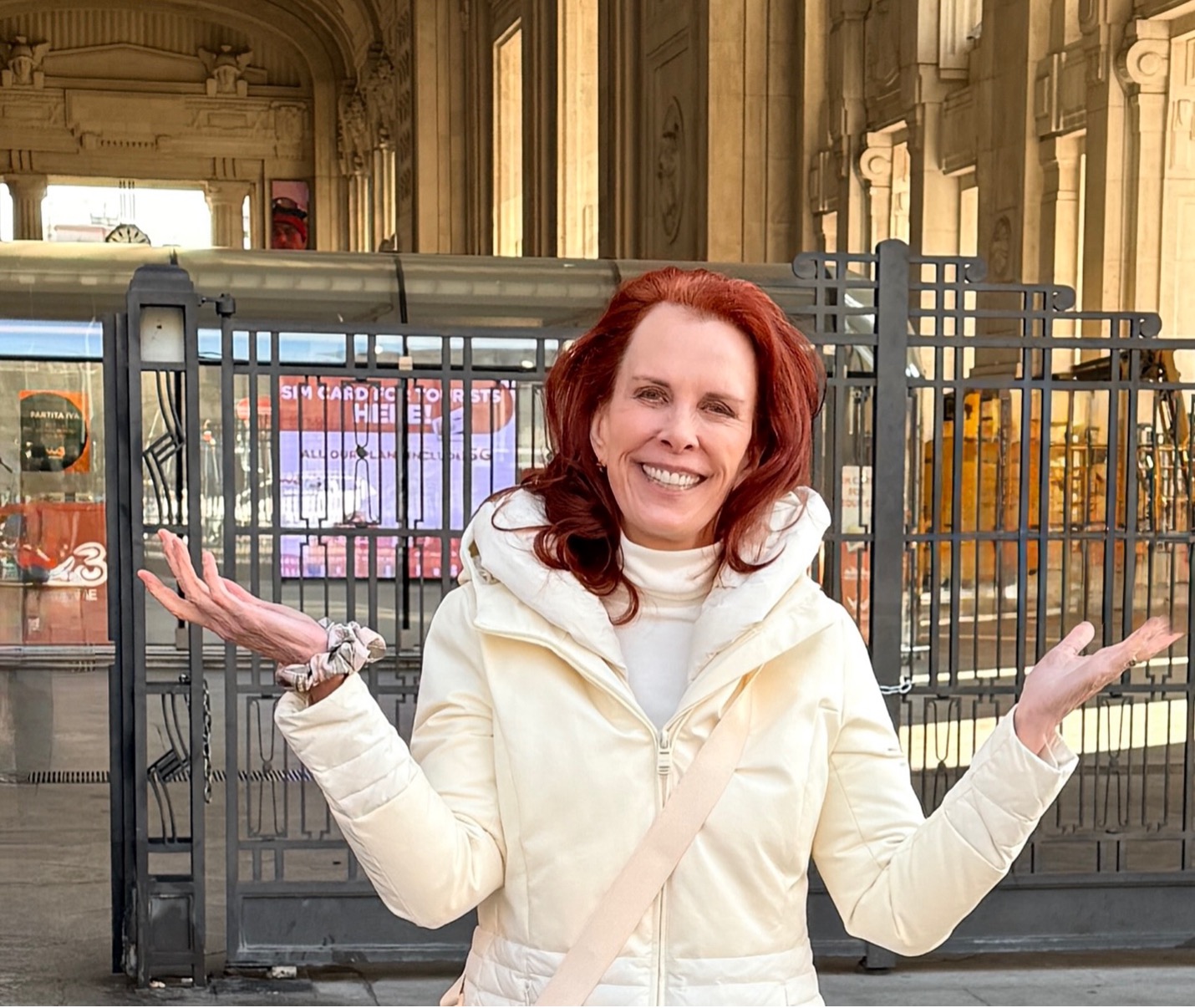
For me, it’s Milan. It’s the place that made me fall in love with Italy—where I was inspired to learn Italian, where I made my first friends who lived “abroad.” Leaving always feels like cutting away a small part of myself, which is why going back feels a little sad. My favorite neighborhoods will be slightly different (they always are), but the sharper change is in me. I’m no longer the newcomer fumbling through menus and getting lost in the cobbled streets, thrilled and overwhelmed in equal measure. What I see now is a double exposure: the city in front of me, and the ghost of the city I carry inside.
For a long time, that felt like loss. Those first experiences are sealed off to me now. But the ache has softened into something closer to acceptance. What I grieve isn’t Milan’s changing neighborhoods—it’s the version of myself who first wandered them.
Psychologists tell us memory isn’t a file we pull off a shelf but a story we rewrite every time we tell it. So going back never offers the original city, or the original you. What you get is a revision, bent by who you’ve become since. And first trips burn brightest because novelty imprints so deeply—the more foreign the place, the stronger the mark. Return trips rarely carry the same charge, not because the streets have dulled, but because you’ve adapted.
It isn’t only geography that works this way. Relationships are places, too. Reuniting with a friend you made on the road means reentering the version of yourself who once sat across from them. That’s why nostalgia feels so tangled up with people. A bar in Madrid isn’t just a bar; it’s the laugh you shared there. A ski run in the Alps isn’t just a trail; it’s who skied beside you. When those people are gone—or when you’ve changed—the place can’t help but feel a little haunted.
We mistake geography for memory. We think if we order the same meal and walk the same street, the past will reassemble itself. But places don’t hold time for us. They keep moving. So do we.
Travel is time travel in disguise. Every trip is a snapshot of who you were in that moment—what you feared, what you wanted, what you noticed. Returning means holding that picture up against the person you’ve become and seeing the space in between.
The mistake isn’t going back. The mistake is expecting it to be the same. Every return is a first time, and if you can accept that, going back stops being a disappointment and becomes a discovery. The best travel advice I can give is travel in the present tense. Not in yesterday’s trip, not in tomorrow’s itinerary, but in the moment that will never come again.
So go back, if you want. But order something different. Notice what’s there, not what’s gone. And if a little sadness rises, let it. Grief is just proof that it mattered.
Italy, fourteen years apart, with a trip or two (or three!) every year in between. More changed than my hair color. 😉